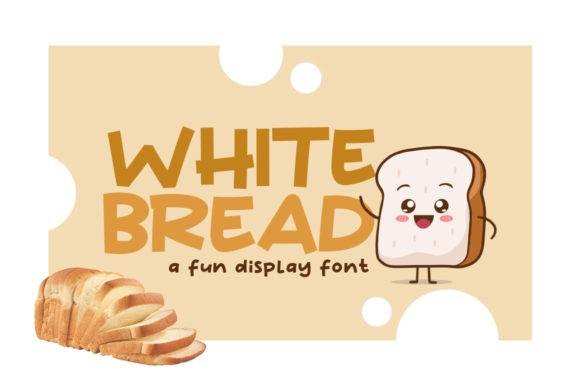
White Bread: A Playful Display Font for Creative Projects
There’s something oddly satisfying about opening a fresh brand board with nothing but a blank canvas and a new font to test. I recently found myself in that exact situation, experimenting with White Bread, a display font that promises a fun and cool vibe. As I began sketching out a logo concept for a local bakery, it became clear that this font was more than just a playful addition—it had the potential to shape the entire identity of the brand.
A Fresh Start with White Bread
White Bread is a display font that leans into its name with a light, airy feel. Its clean lines and rounded edges give it a friendly, approachable character, making it ideal for projects that need a touch of whimsy without sacrificing clarity. When I first placed it on a mockup of a bakery logo, the result felt immediately inviting—like a warm smile from the first glance.
The font has a slightly uneven rhythm in its strokes, which adds an organic charm. It's not too structured, nor is it overly casual. This balance makes it versatile enough to work across different contexts, whether it's a playful children's game or a more refined branding project that still wants to stand out.
Testing White Bread in Real Branding Scenarios
I tested White Bread in several real-world scenarios. On a packaging mockup for a handmade soap label, the font added a sense of fun without overshadowing the product's natural ingredients. The same could be said for a social media layout where the font was used as a headline. It caught attention without being distracting, which is a rare quality in display fonts.
On a business card design, White Bread worked well as a secondary text element, adding personality to a more traditional sans-serif body font. In contrast, when I tried using it as the main typeface on a website header, it looked great on larger screens but lost some of its charm at smaller sizes. That’s a good reminder that while White Bread excels as a display font, it might not be the best choice for long-form content or small text elements like footers or navigation menus.
For a poster design promoting a local café’s seasonal menu, the font stood out against a muted background, reinforcing the theme of comfort and simplicity. It also performed well on a printed shop sign, where its boldness helped draw in passersby from a distance.
Font Pairing and Practical Considerations
When pairing White Bread with other fonts, I found that it works especially well with a modern sans-serif or a classic serif font. For example, combining it with a sleek sans-serif like Montserrat gave the design a polished yet playful look, perfect for a creative studio identity. On the other hand, pairing it with a handwritten script font added a more personal, artisanal feel, which would be great for a boutique or handmade shop.
One thing to note is that White Bread doesn’t come with a wide range of weights or alternates, so it’s best used as a primary display font rather than a full typography system. If you're planning to use it in a commercial setting, make sure to check the licensing terms before applying it to client work, templates, merchandise, or print-on-demand products.
Also, since it's a display font, it’s important to test how it looks in different sizes and formats. While it shines in large headlines and logos, it may not be the best fit for small text or long paragraphs. Always consider readability and legibility when integrating it into your final designs.
Who Should Use White Bread?
White Bread is best suited for brands that want to convey a sense of playfulness, creativity, and approachability. It's a great choice for children’s brands, creative studios, lifestyle businesses, and any project that benefits from a lighthearted tone. However, if your brand needs to maintain a formal or professional image, this font might not be the most appropriate choice.
Ultimately, White Bread is a versatile and charming display font that can elevate the visual appeal of your designs. Whether you're working on a logo, packaging, or digital assets, it brings a unique personality that can help your brand stand out in a crowded market. Just remember to test it thoroughly and pair it wisely to ensure it complements your overall design strategy.